
Criminal Court Records in Branch County
A criminal court record is the official case file a court keeps for a criminal charge. In Branch County, the County Clerk serves as the clerk of the 15th Circuit Court and maintains all court files. Every pleading, motion, and order in a felony case passes through that office. The 3-A District Court keeps its own records for misdemeanors and the early steps of felony cases. Together these files form the written history of a prosecution. They show what was charged, what the defendant answered, and how a judge or jury resolved it.
Two trial courts handle criminal matters in the county. The 3-A District Court hears nearly all misdemeanors and holds the preliminary examination for felonies. If a district judge finds probable cause, the felony is bound over to the 15th Circuit Court for trial. The circuit court then becomes the trial court for that felony. This split means one criminal case can leave records in two courts. A misdemeanor stays in district court, while a felony starts there and moves up. For a closer look at the counts a prosecutor files, the Branch County arrest records and court charges page follows each charge from filing through its current status.
How to Search Branch County Criminal Court Records
Public case information is searched online through Michigan's statewide system. The 15th Circuit Court points the public to MiCOURT Case Search for civil, criminal, traffic, family, and probate cases. A search can begin with a defendant name or a case number. For the full paper file, the request goes to the County Clerk.
- Open the MiCOURT case search portal for Michigan trial courts.
- Search by the defendant name or the exact case number.
- Narrow the results by court, case type, and filing or offense date.
- Open the case to read the docket history and the disposition.
- Request a certified copy from the County Clerk when a court-stamped record is needed.
MiCOURT shows case data, not document images. State rules limit public web access to the case number, party names, and case history. To read the actual complaint, judgment, or sentence, the clerk's court-record search is the fallback. That request costs a $10 search fee for each case type over a ten-year span, with plain copies at $1 per page. Certified copies add $10 plus $1 per page. Payment is cash or money order only, payable to the Branch County Clerk.
Stages of a Branch County Criminal Case
A criminal case follows a set order, and each step leaves a mark in the record. It starts when charges are filed and the defendant is brought before a judge. Pretrial steps sort out evidence and any plea offer. The case ends in a plea or a trial, then a sentence if there is a conviction. The 15th Circuit Court lists each of these events on the docket by date.
Case flow: Charges Filed › Arraignment › Pretrial / Motions › Plea or Trial › Disposition › Sentencing
| Stage | What Happens |
|---|---|
| Arraignment | The defendant hears the charges, enters a first plea, and the court sets bond. |
| Pretrial / Motions | Lawyers trade evidence, argue motions, and may discuss a plea agreement. |
| Plea or Trial | The defendant pleads, or a judge or jury decides guilt at trial. |
| Sentencing | After a conviction, the judge orders jail, prison, probation, fines, or other terms. |
Reading Dispositions and Sentences
The disposition is how a charge ended. It is the single most important line in a criminal record. A charge can end in a guilty plea, a no-contest plea, a guilty verdict, an acquittal, or a dismissal. Some cases end in a diversion or deferred outcome, where the charge is held open and later dropped if terms are met.
The sentence follows a conviction and spells out the punishment. In Branch County that can mean jail through the sheriff, a prison term, probation with the court, fines, costs, or restitution to a victim. A felony sentence is entered in circuit court, while a misdemeanor sentence stays in district court. Reading both lines together shows not just what someone was accused of, but what the court actually decided.
What a Branch County Criminal Court Record Shows
A public case entry can surface far more than a name. Michigan's search model exposes party and charge data even when the underlying documents stay private. The fields below are the ones a reader is most likely to see in a criminal file.
| Field | What It Shows |
|---|---|
| Case Number | The unique court file number, tied to a case year and case type. |
| Defendant | The person charged, listed as a party to the case. |
| Charges | Each count filed, coded to the statute the state says was broken. |
| Judge | The judge or magistrate assigned to hear the case. |
| Plea | The defendant answer to each charge, such as guilty, not guilty, or no contest. |
| Disposition | How each charge ended, with the offense and disposition dates. |
| Sentence | The punishment ordered after a conviction. |
| Next Hearing | The date and time of the next scheduled court event. |
Prosecution and Defense in Branch County
Two offices shape every criminal case in the county. The prosecutor decides what to charge and carries the case for the state. Defendants who cannot afford a lawyer are represented by the county public defender. Both offices appear in the case record, and both can answer questions the online docket does not.
The Branch County Prosecuting Attorney files charges and handles felony, misdemeanor, and probate matters through separate legal clerks.
Branch County Prosecuting Attorney
Victor Fitz, Prosecuting Attorney
Courthouse, 31 Division St.
Coldwater, MI 49036
517-279-4319
The Branch County Public Defender is the county's first full-time defense office and represents indigent people charged with misdemeanors and felonies.
Branch County Public Defender
Terri Norris, Chief Public Defender
300 Orleans Blvd.
Coldwater, MI 49036
517-279-4338
Mon to Fri, 8:30 AM to 4:30 PM
Charges vs. Convictions
Being charged is not the same as being convicted. A criminal court record can show charges that were dropped, dismissed, or that ended in an acquittal. A charge is only an accusation, held to the low bar of probable cause. A conviction is a finding of guilt, proven beyond a reasonable doubt or admitted in a plea. Both stages are public, so a clean record still lists charges that never became convictions.
| Charge | Conviction | |
|---|---|---|
| Stage | Accusation | Verdict or plea |
| Burden of Proof | Probable cause | Beyond reasonable doubt |
| Public Record | Yes | Yes |
Federal Criminal Cases From Branch County
Not every criminal case from the county is a state case. Federal crimes are prosecuted in the U.S. District Court for the Western District of Michigan, and Branch County sits in that court's Southern Division. Those files are held by the federal court, not the County Clerk. The Western District county list confirms Branch among the Southern Division counties.
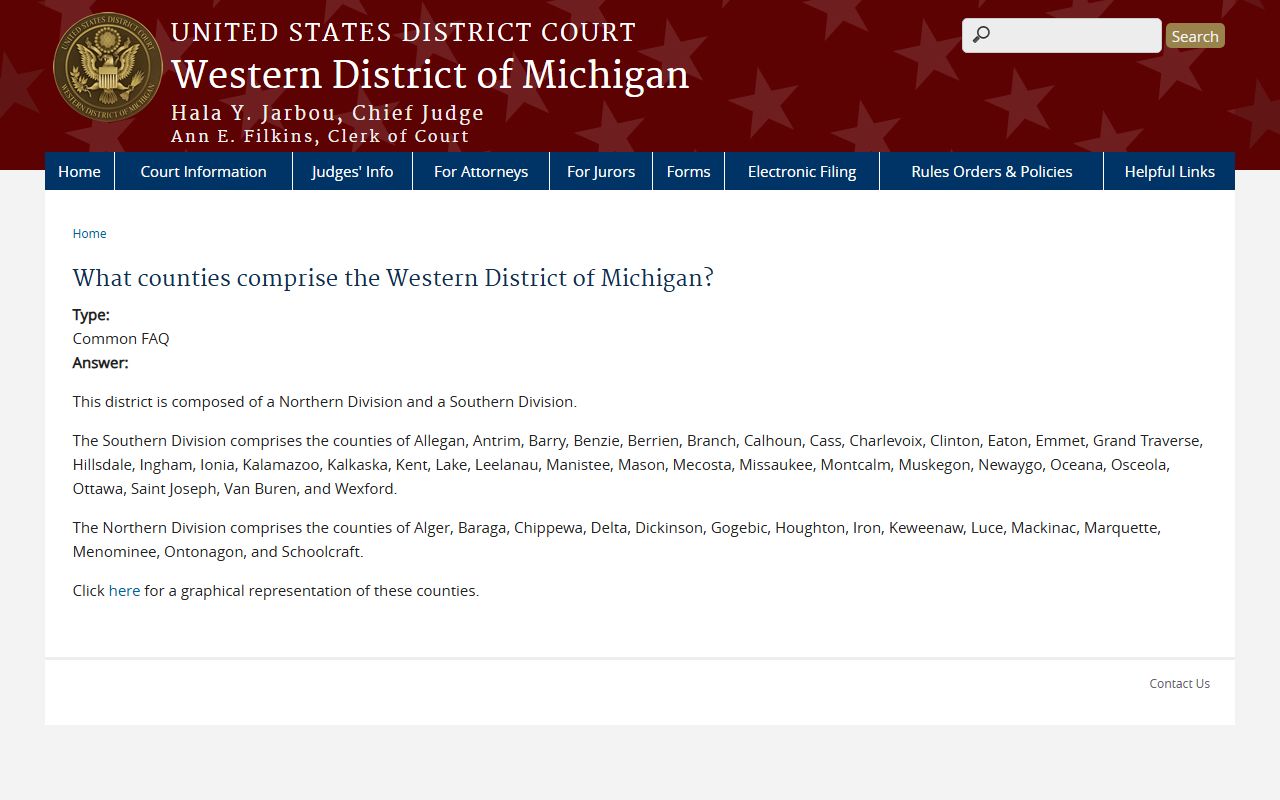
A federal case follows a different track than a county prosecution and can be appealed to the Sixth Circuit. To read a federal criminal file, the public uses the national electronic docket system rather than a county portal.
Federal court records are searched through PACER, the Public Access to Court Electronic Records service. Anyone can register, then look up a case by name or number in the district where it was filed.
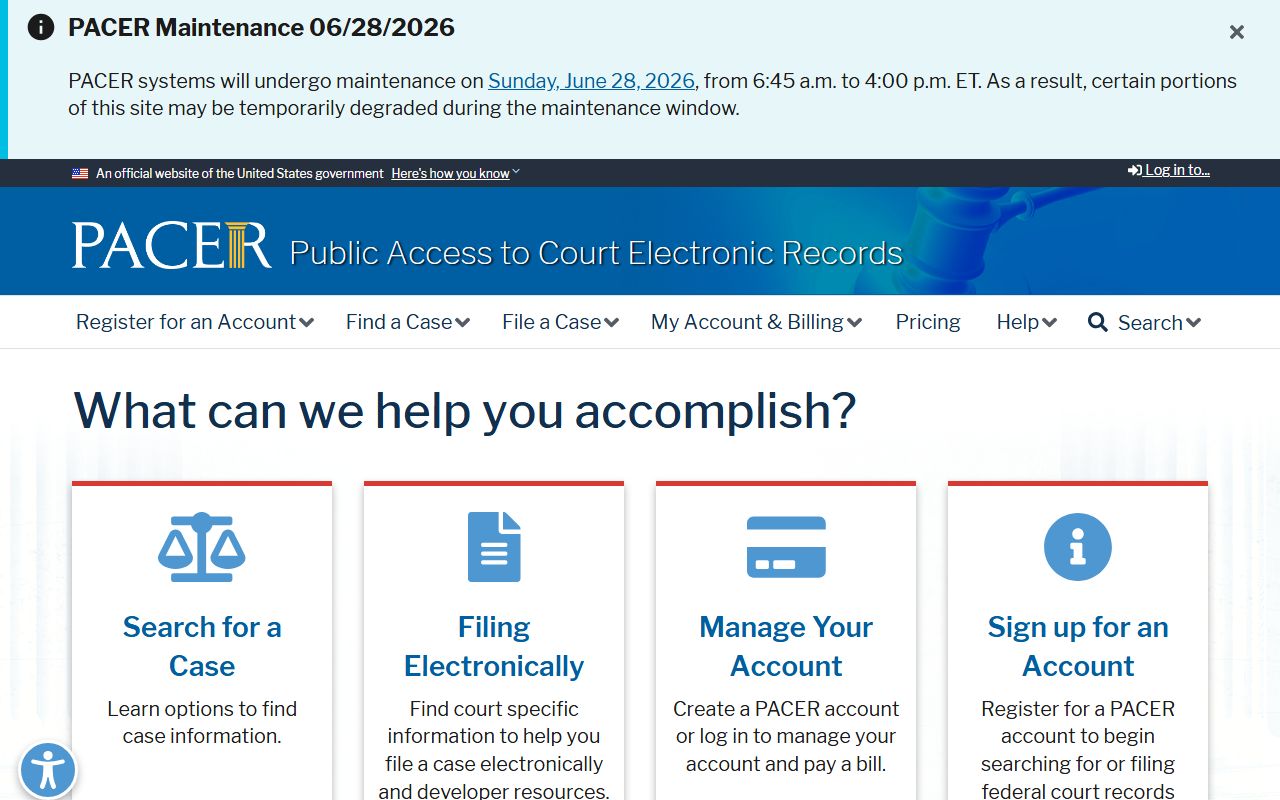
PACER charges a small per-page fee for documents but lets users confirm whether a Branch County defendant has a federal case at all. That makes it the right tool when a matter is not found in the state system.
Sealed vs. Expunged (Set Aside) Records
Some criminal records are removed from public view. Michigan calls its expungement process a set-aside, and it can clear an eligible conviction from the public record. The set-aside statute, MCL 780.621, controls who qualifies and how a conviction is cleared. Once granted, the case is treated as though the conviction never happened for most public purposes.
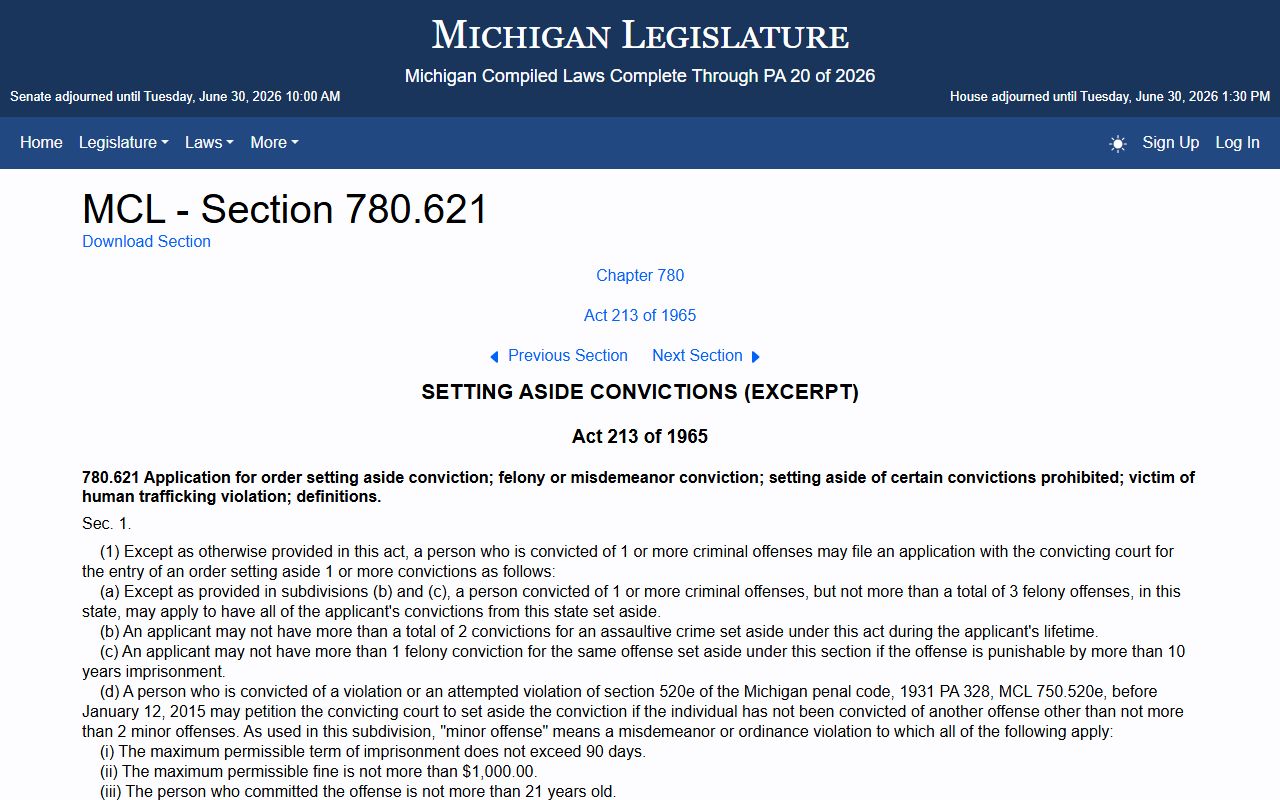
A sealed case is hidden from public search but still exists for limited official use, while a set-aside goes further and treats the conviction as gone. The table sums up the difference.
| Sealed | Expunged (Set Aside) | |
|---|---|---|
| Visibility | Hidden from public | Treated as never happened |
| Law Enforcement | Limited access | Very limited access |
| Eligibility | Set by court rule and case status | Set by MCL 780.621 and waiting periods |
Public Access to Criminal Court Records
Michigan treats court records as public by default, but the file and the online view are not the same thing. State records standards say public web access is limited to the case number, party names, and case history, and courts do not post document images online. That is why a search can show a docket summary while the full record still needs a clerk request. The broader Branch County court records search follows the same rules for civil and family files.
Key Statutes:
Michigan Code § 15.231 - the Freedom of Information Act, which sets the state policy of open access to public records.
MCR 8.119 records standards - limits public online court access to case number, party names, and case history.
Background Check Considerations
A casual name search is not the same as a formal background check. Employers, landlords, and licensing boards that make decisions must use a screening process that follows federal fair-reporting rules. A public docket lookup is fine for personal knowledge, but it can be incomplete, out of date, or attached to the wrong person with a common name. For anything with legal weight, the certified court file or an official state history is the safer source.
Important: This site is not a consumer reporting agency under the Fair Credit Reporting Act, and its records may not be used to decide credit, employment, housing, or insurance.
Restricted Criminal Court Records in Branch County
Not every criminal matter is open to the public. Juvenile cases are the clearest example. Under MCL 712A.28, the court keeps records of juvenile cases, but they are open only by court order. That keeps most youth matters out of a normal public search.
Other files carry a suppressed status. MiCOURT marks each case as public or suppressed, and suppressed cases exist in the system yet stay out of public results. Set-aside convictions, sealed matters, and some ongoing investigations fall into that hidden layer. When a record cannot be found online, that does not always mean it never existed. It may mean the law keeps it closed, or that only a clerk request or court order can reach it.