
Branch County Arrest Records and Court Charges
An arrest record is the account of an arrest itself: who was taken into custody, when, by which agency, and on what suspected offense. In Branch County the sheriff and local police handle that booking side. An arrest alone does not set the charges. The prosecutor reviews the case and decides which formal charges to file with the court, and those filings become the court charge record. One event creates two records, an arrest record and a charge record, and they do not always match.
The two records answer different questions. Booking detail and custody status sit on the jail side, and the Branch County inmate records page covers that roster and booking information. The court charge record, by contrast, tracks what the prosecutor actually filed and how each charge moves through the case. The county does not post a public mugshot or arrest blotter, so the charge record is usually the most reliable public trail for court charges after arrest. The full case file, with the outcome and sentence, lives in the criminal court records.
How to Find Branch County Arrest Records and Charges
Court charges are searched through Michigan's statewide case system. MiCOURT Case Search covers criminal, civil, traffic, family, and probate cases across the state trial courts. A search there shows the charge list and its status. It does not show a booking photo or the arrest report, which come from the arresting agency.
- Open the MiCOURT case search portal for Michigan trial courts.
- Search by the defendant name or the case number.
- Open the case and read the full list of charges.
- Check each charge for its statute code, level, and current status.
MiCOURT shows case data, not the underlying documents. For a certified copy of the charging paper, the request goes to the County Clerk, which charges a $10 search fee for each case type over a ten-year span. A broader criminal history that pulls charges together from across Michigan is a separate statewide record, not something a single county portal returns.
How Charges Get Filed After an Arrest
The charge record begins when the prosecutor files a charging document. That paper names each count and cites the law the state says was broken. Michigan uses three main types of charging document. Which one appears depends on how serious the case is and how it reached the court.
| Complaint | Information | Indictment | |
|---|---|---|---|
| Filed By | Officer / Prosecutor | Prosecutor | Grand Jury |
| Common For | Misdemeanors | Many felonies | Serious felonies |
| Starts | The case | The case | The case |
Charge Codes and Severity Levels
Every charge is tied to a specific statute, usually a section of Michigan Compiled Law. The code tells a reader exactly what conduct is alleged and how serious it is. Michigan sorts offenses into felonies, misdemeanors, and civil infractions.
Felonies carry the longest possible penalties and are tried in the 15th Circuit Court. Misdemeanors are lesser crimes handled in the 3-A District Court. Civil infractions, like most traffic tickets, are not crimes at all and carry fines rather than jail. One arrest can produce several charges at once, mixing levels, so a single case may list a felony alongside one or two misdemeanors. The severity level also decides which court holds the record and how the case moves.
Charge Status and What It Means
Charges rarely stay frozen. As a case moves, the prosecutor can amend a count, reduce it, add a new one, or drop it. A judge can dismiss a charge outright. Reading the status shows where each count stands right now, which often matters more than what was first filed.
| Status | What It Means |
|---|---|
| Pending | The charge is active and the case has not yet been decided. |
| Amended / Reduced | The prosecutor changed the charge, often to a lower level. |
| Dismissed | A judge dropped the charge, so it no longer stands. |
| Nolle Prosequi | The prosecutor chose not to pursue the charge, ending it. |
Arrest, Booking, and Warrant Costs
Getting arrested and booked carries its own costs, separate from any fine a charge might bring. The Branch County Sheriff charges a $12 booking fee for anyone processed into the jail. A person booked on a warrant is charged $10 for each warrant. Those fees are added on top of any bond needed for release.
The county's bond and booking page lists the cash, cash-or-surety, ten-percent, and personal recognizance bond types. Because the county publishes no public warrant list, a bench warrant often first surfaces at booking or through a direct call to the court. That makes the charge record and the sheriff's booking desk the two practical starting points after an arrest.
Charges vs. Convictions
Being charged is not the same as being convicted. An arrest record and a charge record can both show accusations that never led to a finding of guilt. A charge is an accusation held to the low bar of probable cause. A conviction is proven beyond a reasonable doubt or admitted in a plea. Both are public, so a record can list a charge that was later dropped.
| Charge | Conviction | |
|---|---|---|
| Stage | Accusation | Verdict or plea |
| Burden of Proof | Probable cause | Beyond reasonable doubt |
| Public Record | Yes | Yes |
Statewide and Federal Charge Lookups
Charges filed in Branch County are only part of a person's record. Some cases are federal, prosecuted in the U.S. District Court for the Western District of Michigan rather than a county court. Those charges never appear in the state system. Federal charges are searched through PACER, the federal courts' electronic record service, using the PACER case finder.
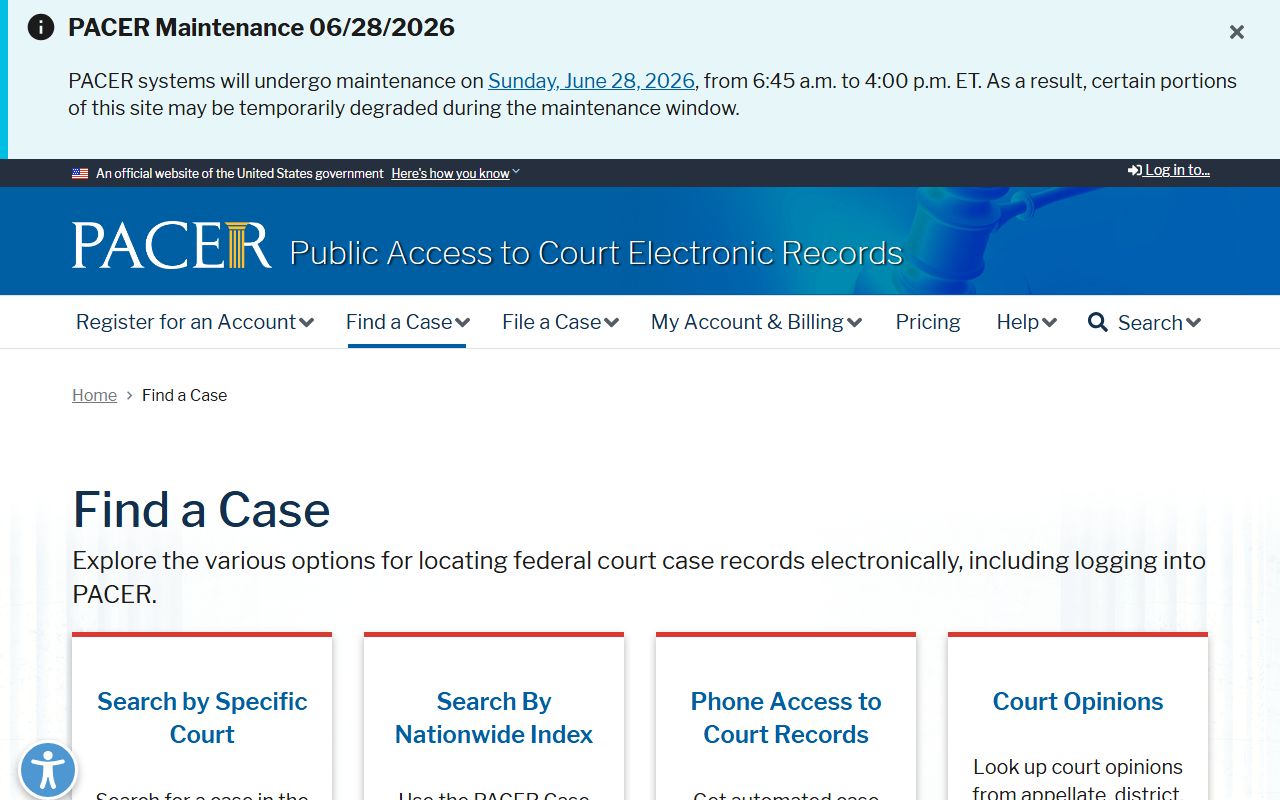
A PACER account confirms whether a Branch County name carries a federal case and lists the charges filed there. For state charges, MiCOURT remains the main statewide tool, while a full criminal history is a separate record kept at the state level.
Sealed vs. Expunged Records
Some charge records are removed from public view. Michigan lets an eligible person set aside, or expunge, an old conviction under MCL 780.621. A set-aside clears the conviction for most public purposes. A sealed case is hidden from search but kept for limited official use. The two are related but not the same.
| Sealed | Expunged (Set Aside) | |
|---|---|---|
| Visibility | Hidden from public | Treated as never happened |
| Law Enforcement | Limited access | Very limited access |
| Eligibility | Set by court rule and case status | Set by MCL 780.621 and waiting periods |
Background Check Considerations
A quick charge search is not a formal background check. Employers, landlords, and licensing boards that make decisions must use a screening process that follows federal fair-reporting rules. A public docket lookup is useful for personal knowledge, but it can be incomplete, dated, or matched to the wrong person with a common name. For a decision with legal weight, the certified court file or an official state history is the safer source.
Important: This site is not a consumer reporting agency under the Fair Credit Reporting Act, and its records may not be used to decide credit, employment, housing, or insurance.
Restricted Charge Records in Branch County
Not every charge is open to the public. Juvenile charges are the strictest example. Under MCL 712A.28, juvenile court records are open only by court order, so most youth charges stay out of a normal search.
MiCOURT also marks some cases as suppressed, meaning they exist in the system but do not appear in public results. Dismissed and set-aside charges may be pulled from view as well. When a charge cannot be found online, that does not always mean it never existed. The law may simply be keeping it closed, or the record may require a clerk request or court order to reach.